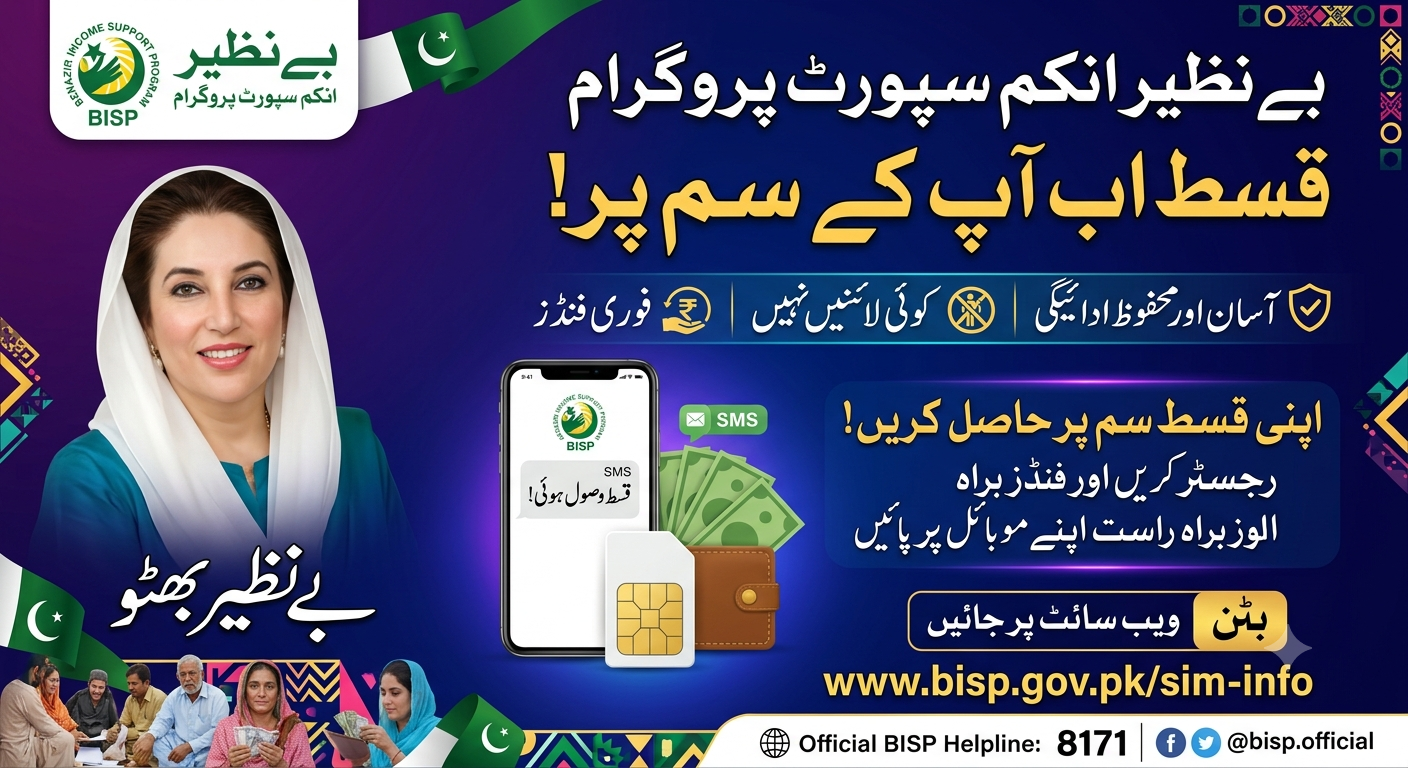
Overview of the Benazir Income Support Program (BISP)
The Benazir Income Support Program (BISP) was launched in July 2008 with the aim of providing financial assistance and social support services to low-income families in Pakistan. It was established as a response to the growing economic challenges and the need for a safety net to alleviate poverty among the most vulnerable populations. The program is named after Benazir Bhutto, the former Prime Minister of Pakistan, and it seeks to empower women and improve overall household welfare.
BISP is primarily targeted towards women, recognizing their role as key decision-makers within their families and communities. Through cash transfers, the program aims to reduce the socio-economic disparities faced by those in need. The target beneficiaries include widows, orphans, and the mentally and physically challenged individuals, reflecting BISP’s commitment to inclusivity and support for marginalized populations.
The core objective of BISP is to alleviate poverty by providing economic relief to eligible families. Financial assistance not only addresses immediate needs but also contributes to long-term stability by enabling families to invest in healthcare, education, and nutrition, thereby fostering a more resilient population. The program has played a critical role in bridging the income gap and providing a cushion against economic shocks, especially during times of crisis.
Over the years, BISP has evolved into a comprehensive social welfare initiative. By integrating additional services such as skill development programs and health insurance, it has become instrumental in promoting social and economic upliftment in Pakistan. Its significance extends beyond mere monetary assistance, as it reinforces the idea of social solidarity and collective progress within the nation.
Purpose and Benefits of SIM Installments
The Benazir Income Support Program (BISP) has made significant strides to enhance the welfare of low-income families in Pakistan. One of the innovative components of this initiative is the introduction of SIM installments, aimed at streamlining the distribution of financial assistance. The primary purpose of SIM installments is to provide beneficiaries with a convenient and secure method for accessing their funds, which is crucial for their daily sustenance.
With the integration of SIM card technology, beneficiaries can receive their financial support directly to their mobile wallets. This digital approach eliminates the need for physical cash transactions, which can often be fraught with risks and logistical challenges. By allowing beneficiaries to withdraw funds from nearby ATMs or through various agents, the SIM installments program offers a layer of security, ensuring that funds are less susceptible to theft or loss.
Additionally, the ease of accessing funds through mobile technology cannot be overstated. Many beneficiaries may face difficulties traveling to distant banks or financial institutions, especially in rural areas. By providing a method to utilize their mobile phones, BISP ensures that beneficiaries can manage their finances more effectively. This convenience directly translates to timely support, empowering families to meet their daily needs, improve their living standards, and achieve financial stability.
Moreover, the SIM installments not only provide immediate financial relief but also promote financial literacy and inclusion among the marginalized sections of society. By engaging with mobile banking services, beneficiaries develop skills that can further their understanding of financial management, thereby fostering a culture of savings and economic independence. Ultimately, the introduction of SIM installments is a significant advancement within the BISP framework, aiming to enhance the quality of life for millions of beneficiaries in Pakistan.
Eligibility Criteria for BISP 2026 SIM Installments
The Benazir Income Support Program (BISP) offers financial assistance to individuals and families in need, particularly in times of economic challenges. For the 2026 SIM installments, certain eligibility criteria must be met to ensure that the support reaches the intended beneficiaries. First and foremost, applicants must be Pakistani citizens aged 18 years or above. This age requirement ensures that individuals can make informed decisions about receiving assistance and managing funds effectively.
Next, applicants should demonstrate their financial need. The eligibility assessment often considers the household income and overall economic status. To qualify for the SIM installments, household income should not exceed a specified threshold defined by the BISP guidelines. The program aims primarily to assist low-income families, thus prioritizing those experiencing severe financial constraints.
Documentation plays a critical role in the application process. Beneficiaries must submit valid identification documents, such as a national identity card (CNIC), as part of their application. Additionally, proof of income, household composition, and other relevant information might be required to corroborate claims of financial need. This documentation helps BISP officials verify eligibility and ensure that assistance reaches those who need it most.
Applicants can confirm their eligibility by utilizing the official BISP website or designated support centers where they can assess their status and receive guidance on the application process. BISP has established a streamlined process to facilitate easy access to information and assistance, ensuring that eligible beneficiaries can receive their SIM installments with minimal complications. Overall, understanding these criteria is essential for applicants to ensure a smooth experience when applying for support from this significant program.
Step-by-Step Application Process for BISP SIM Installments
The Benazir Income Support Program (BISP) aims to provide financial support to low-income households in Pakistan. Beneficiaries looking to access the SIM installments must follow a structured application process to ensure their enrollment in the program. This section outlines the steps required to successfully apply for the BISP SIM installments.
First, potential applicants must confirm their eligibility for the BISP program. This can be done by visiting the official BISP website or contacting local BISP offices for detailed eligibility criteria, such as income levels and family size. Once confirmed, applicants should prepare the necessary documentation, which typically includes a copy of the CNIC (Computerized National Identity Card), proof of income, and any other relevant identification materials.
Next, beneficiaries need to register with the BISP. This can be completed either online or in person. To register online, applicants should visit the BISP online portal, where they will need to fill out an application form, providing all necessary personal and financial information. It is crucial to ensure that all information submitted is accurate to avoid any issues during processing.
After submitting the online application, applicants should receive an acknowledgment receipt confirming their application submission. In case of any discrepancies or issues, beneficiaries can approach the designated helpline for assistance. Alternatively, those opting for in-person registration can visit local BISP offices, where officials will guide them through the application process step by step.
Upon successful registration, beneficiaries will be informed about their eligibility status and can then avail themselves of the SIM installments through designated mobile networks. Regular updates and communication regarding the disbursement process will typically be provided via SMS, ensuring beneficiaries remain informed. By following this structured approach, applicants can navigate the application process for BISP SIM installments effectively.
Distribution Mechanism of SIM Installments
The Benazir Income Support Program (BISP) employs a sophisticated distribution mechanism for the allocation of SIM installments to its beneficiaries. This system utilizes advanced technology to ensure efficient disbursement of funds while maintaining transparency. A mobile application linked to the BISP database facilitates the identification of eligible beneficiaries. Upon registration, each beneficiary receives a SIM-enabled card that serves as a conduit for receiving installments.
The distribution of funds occurs through pre-defined timelines, which are communicated to beneficiaries to ensure they can access their financial aid promptly. Typically, the installments are disbursed quarterly; however, the program adjusts its schedule in response to different events or circumstances that may affect the beneficiaries, such as emergency relief efforts in times of crisis.
Funds can be accessed through various channels, ensuring that beneficiaries have flexible options to accommodate their needs. The primary method is through authorized banking institutions and ATMs where beneficiaries can withdraw cash directly. Additionally, BISP has partnered with mobile wallet services, allowing users to receive their SIM installments digitally. These innovations greatly enhance the accessibility of funds and reduce the possibility of fraudulent activities.
This multi-channel approach not only supports beneficiaries in diverse environments but also promotes financial inclusion by encouraging the use of digital financial services. As BISP continues to evolve, it remains committed to enhancing its distribution mechanism, ensuring that funds reach the intended recipients in a timely and secure manner. The structured disbursement process reflects the program’s dedication to uplifting economically vulnerable segments of society by providing vital financial support.
Impact of BISP SIM Installments on Poverty Alleviation
The Benazir Income Support Program (BISP) has emerged as a pivotal initiative in Pakistan, specifically designed to alleviate poverty among the most vulnerable segments of the population. The introduction of SIM installments as part of the program has a measurable impact on poverty alleviation. Statistical data indicates that the BISP has reached millions of households, providing necessary financial support to approximately 5.7 million families. Recent surveys reveal that households benefiting from these installments have experienced improved food security and increased access to healthcare services.
Several case studies underscore the transformative effects of the BISP SIM installments. For instance, a family from the rural district of Multan reported that the monthly cash assistance enabled them to afford essential goods, such as nutritious food, which significantly enhanced their overall living standards. Furthermore, testimonials from BISP beneficiaries affirm that access to these funds has empowered individuals, especially women, to pursue small-scale entrepreneurial ventures. Women who previously lacked financial agency are now investing in local businesses, thereby contributing to the local economy and fostering community resilience.
In a broader context, the SIM installment mechanism has facilitated more efficient disbursement of funds and helped maintain transparency within the program. By utilizing mobile technology, the BISP reduces the challenges related to cash distribution, minimizing the risk of corruption and ensuring timely support reaches those in need. Reports indicate that the simplified process has led to heightened participation and a greater sense of ownership among beneficiaries, effectively engaging them in the poverty alleviation mission.
Overall, the BISP SIM installments play a crucial role in transforming lives by mitigating the severe effects of poverty in Pakistan. While challenges remain, the positive outcomes highlighted through various reports and personal accounts suggest that the program is making significant strides toward addressing economic disparities and empowering marginalized communities.
Challenges Faced by BISP and Solutions
The Benazir Income Support Program (BISP), a crucial initiative aimed at providing financial assistance to vulnerable segments of society, has encountered several significant challenges in implementing SIM installments. One of the most pressing issues is the technological barriers faced by many beneficiaries. A considerable portion of the population may lack access to the necessary technological infrastructure or may not be sufficiently literate in mobile usage. This prevents them from effectively utilizing the SIM installment system, thereby hindering their access to support.
Fraud is another major challenge confronting BISP. Instances of impersonation or misappropriation of funds have been reported, where ineligible individuals exploit the system, undermining the integrity of the financial assistance provided to those in genuine need. Such fraudulent activities not only erode public trust but also divert essential resources from beneficiaries who require them the most.
Additionally, outreach issues present significant obstacles. Many eligible individuals may be unaware of their eligibility for financial assistance or may find it challenging to navigate the application process. This lack of awareness can lead to a significant underutilization of the program, preventing those in dire need from receiving critical support.
To address these challenges, BISP can consider various solutions. Enhancing technological access for beneficiaries could involve partnerships with local telecommunication firms to provide subsidized mobile devices or internet access. Moreover, BISP might implement a more robust identity verification process to minimize fraud, potentially utilizing biometric technologies to ensure that only eligible individuals receive assistance.
Furthermore, increasing community outreach efforts through local organizations or grassroots initiatives would help in raising awareness about BISP and its benefits. Conducting workshops and providing informative materials can educate the public about the application process and the significance of the program. By focusing on these solutions, BISP can work towards overcoming the current challenges and ensure that assistance reaches those who truly need it.
Success Stories from BISP Beneficiaries
The Benazir Income Support Program (BISP) has significantly impacted the lives of numerous beneficiaries across Pakistan. Many individuals have shared their success stories, reflecting the difference that the SIM installments have made in their lives and the lives of their families.
One inspiring example is the story of Amina, a resident of a small village in Sindh. Before receiving support from BISP, Amina struggled to provide for her family of five. Since enrolling in the program, the monthly SIM installments have allowed her to invest in a small tailoring business. This venture has not only enhanced her family’s financial stability but has also empowered her to educate her children, ensuring a brighter future for them.
Similarly, the story of Rahim, who lives in Punjab, showcases the transformative potential of BISP. He utilized his SIM installment funds to purchase livestock, which has become a lucrative source of income. With the additional revenue, Rahim has been able to improve his agricultural practices, leading to higher crop yields. His success underscores the effectiveness of the program in fostering self-sufficiency among its beneficiaries.
Moreover, the BISP has enabled many women to establish their own businesses, thereby promoting gender equality and economic empowerment. In a challenging socio-economic landscape, these stories of progress illustrate how targeted financial support can be a conduit for community upliftment. Beneficiaries, who once faced uncertainty, now demonstrate resilience and ingenuity through their entrepreneurial endeavors.
These success stories exemplify the vital role that the Benazir Income Support Program plays in changing lives. The tangible benefits of the BISP SIM installments not only provide immediate financial relief but also instill hope and encourage further development among the beneficiaries. Every story shared inspires confidence in the program’s impact, highlighting its importance in the ongoing fight against poverty in Pakistan.
Future of BISP and SIM Installments Beyond 2026
As we look towards the future of the Benazir Income Support Program (BISP) and its SIM installments beyond the year 2026, it becomes paramount to consider the evolving socio-economic landscape of Pakistan. The BISP, initiated in 2008, has been instrumental in alleviating poverty, yet its effectiveness hinges on continual adaptation to meet the needs of its beneficiaries.
Future reforms may be essential as the program looks to expand its reach and inclusivity. For instance, integrating technology further into the application processes and payment systems could enhance the program’s efficiency. The potential to introduce biometric identification for beneficiaries or improving mobile payment systems would align the BISP with global best practices in financial aid distribution.
Moreover, as poverty alleviation remains a key concern for the government, the BISP could see an expansion in its funding and resources. The aim would be to include a broader demographic, particularly focusing on marginalized groups that may have previously been overlooked. This could involve tailoring support packages to the specific needs of different regions or vulnerable populations, allowing for a more customized approach to economic assistance.
Additionally, it’s important to acknowledge that the social fabrics of communities change over time. Thus, the BISP will likely require continual evaluation of how its support mechanisms are performing relative to changes in the economic conditions of its beneficiaries. Engaging stakeholders from the community will be crucial to ascertain gaps in support and ensure that the program evolves effectively.
Overall, the future of the BISP and its SIM installments is poised for evolution through reforms and increased adaptiveness, ensuring sustained support for Pakistan’s low-income families amidst shifting socio-economic realities.